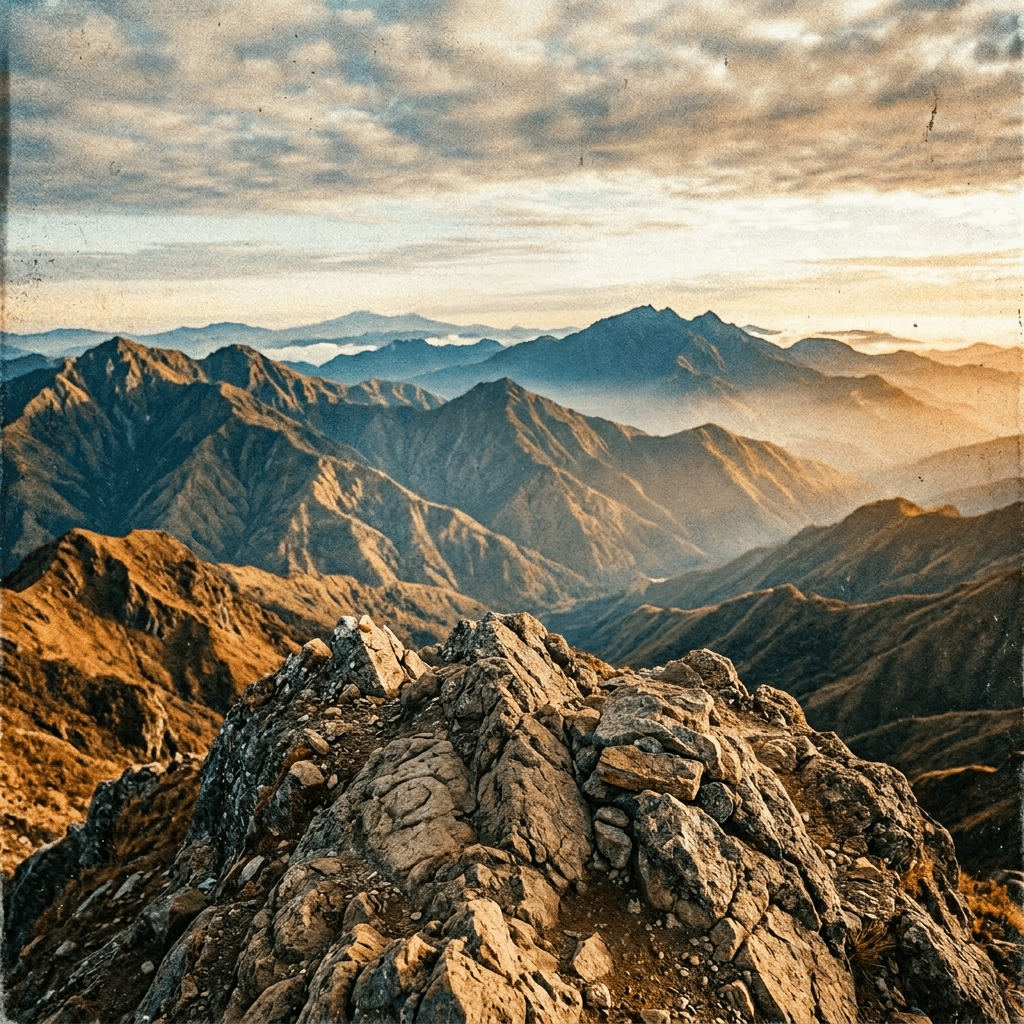
Not so long ago, I was just an armchair wanderer. Reading about mountains in books, imagining the cold
wind at the summit, the sea of clouds, the aching legs. Now here I am — actually planning to climb one. Life
is strange that way. You think you will just read about things forever, and then one day you realize your body is restless and your spirit is asking for something real.
It started with a simple scroll, as most things do these days. A reel about the benefits of mountain climbing
— physical fitness, mental resilience, nature connection. The usual algorithm bait. But something stuck.
Maybe it was the timing. Maybe it was the fact that I have been sitting in front of screens for far too long,
managing numbers and portfolios and deadlines. My son is growing up fast. My daughter is already beating
me at Mortal Kombat 1. And I am here, forty-something, wondering if my knees will still carry me up a hill. So I did what any self-respecting armchair wanderer turned would-be mountaineer would do — I researched. Extensively. Google, blogs, Reddit threads, Facebook groups I do not even remember joining. I learned about mountains in Rizal. Fifteen of them, ranked easiest to hardest. I made a list. I even made a PDF, because of course I did. I am that kind of person. The kind who makes PDFs about mountains before actually climbing one.
The first mountain on my list is Mount Kulis. Sitio Maysawa, Tanay, Rizal. Around 627 meters above sea
level. A beginner-friendly climb, they say. Two to three hours round trip. Grassland ridgeline, farm trails, and
if the weather is kind — a sea of clouds that makes you feel like you are floating. There is also this rock
formation called “Suso ni Ina” which, honestly, I did not know existed until I read about it. The Philippines is full of things you do not know exist until you stumble upon them.
Why Kulis? Not because it is the easiest. Though that helps. I am not delusional — I know my body. Years of
sitting, intermittent fasting experiments, PS5 marathons. My knees are not what they used to be. But Kulis feels right. It is close to Manila. The trail is established. Day-hike friendly. And there is something poetic about starting with a mountain whose name sounds like “coolness” in Filipino. Kulis. Cool. Maybe that is a sign. Or maybe I am just looking for signs because I am nervous.
I told my wife about it. She looked at me with that look — the one that says, “You are going to do something
strange again and I will have to adjust.” She is used to it by now. The fasting, the sudden interest in blogging,
the finance spreadsheets at midnight. She just asked, “Will you bring the kids?” I said no. Not this time. This one is mine. The first summit is a solo conversation between you and the mountain. At least that is what the
blogs say. And I am still very much a blog person.
My son overheard us. He asked if he can come next time. I said yes. He is eight. He plays Demon Slayer and thinks he can defeat anything. Maybe by the time he is ready, we can do Mount Daraitan together. That one is harder — six to eight hours, river crossings, bouldering. But that is a story for another time. For now, I need to see if I can even finish Kulis without embarrassing myself.
I have started preparing. Not physically, mind you — I am still in the research phase. The reading-about-
shoes phase. The comparing-trail-water-bottles phase. I learned that you need good grip shoes, not running shoes. I learned that you need to register with the barangay. I learned that some tour operators charge ₱1,500
for a joiner package but nobody really knows if they are legit because they only exist on Facebook. I learned
that the Philippine mountaineering community is both welcoming and intimidating — they have acronyms
for everything. DENR, DOT, LNT. Leave No Trace. I should probably learn what all of those mean before I
show up.
The plan is simple. Wake up early — which for me is a challenge since my body is on a night shift schedule.
Drive to Tanay before sunrise. Start the trek at dawn. Reach the summit by mid-morning. Take a photo that I
will probably overthink. Eat a packed lunch — maybe the same beef and eggs I cook for the family, but this
time on a mountain. Descend before noon. Drive home. Shower. Tell my wife I survived. Play Silent Hill f in
the afternoon to calm my nerves.
Will it go exactly like that? Probably not. I might get lost. I might get rained on. I might realize my cardio is
worse than I thought. I might get to the trailhead and suddenly feel very small, very human, very aware that
the mountain does not care about my spreadsheets. That is the point, I think. That is why I am doing this. To
feel small. To feel something that cannot be managed, forecasted, or optimized.
There is a quote I read somewhere — “The best view comes after the hardest climb.” I used it in the PDF I
made about mountain climbing benefits. Cheesy, yes. But also true. At least I hope it is true. Because if I get
to the top of Kulis and the view is just fog and my own regret, I am going to be very disappointed. And also
very out of breath.
But I will go anyway. Because the alternative is staying home, scrolling, watching my son level up in games
I am too slow to finish, making another PDF about something I have not experienced. And I am tired of that
version of myself. The armchair wanderer was a good phase. A necessary phase. But phases end. And new
ones begin — usually at the bottom of a trail, with aching knees and a backpack that is probably too heavy.
See you at the summit. Or at least, see you at the trailhead. Baby steps.


